

Thalassemia in children is something parents often learn about only after a blood test comes back unexpected. It’s an inherited disorder, passed down through faulty genes, where the body can’t produce hemoglobin the way it should. Hemoglobin sits inside red blood cells and carries oxygen. When it’s missing or malformed, those cells break down far ahead of schedule, leaving the body short on oxygen-carrying capacity. Mild forms, the ones called thalassemia trait or minor, often cause no symptoms worth treating. Severe forms are a different situation entirely. Regular blood transfusions become part of life, along with chelation therapy to clear out the iron those transfusions leave behind. In India, carrier rates are high enough that this isn’t a rare finding. Catching it early matters more than most families realise until they’re already in the middle of it.
According to doctors at Sparsh Children’s pediatric hospital in Parel, “Thalassemia major doesn’t announce itself dramatically. A pale, tired baby who isn’t feeding well and isn’t growing the way they should, that’s often how it starts. The sooner we confirm it, the sooner we can build a proper management plan around the child.”
What Are the Signs of Thalassemia in Children?
Symptoms tell you the severity before any label does. Thalassemia minor often goes unnoticed entirely, while the major form surfaces within the first two years.
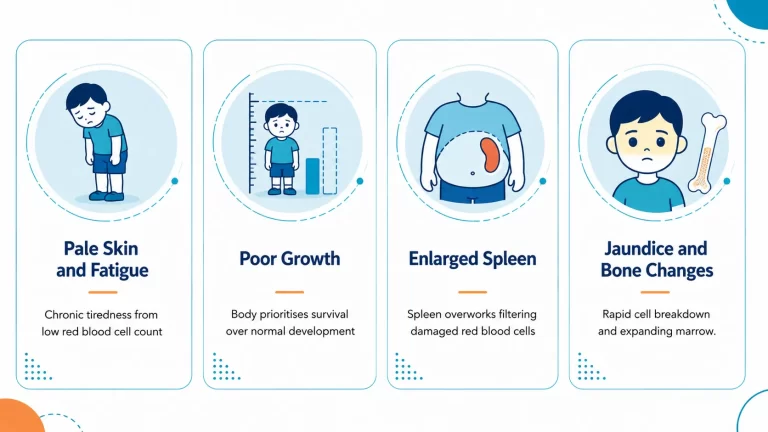
Pale skin and fatigue, what the body is actually doing: The marrow keeps producing defective cells trying to compensate. It can’t keep up. Parents usually notice the tiredness before they notice the colour change.
Poor growth, when diet isn’t the explanation: Chronic anemia forces the body to prioritise basic function. Development takes the back seat, and the growth chart shows it over time.
An enlarged spleen, and why it matters: The spleen clears damaged red blood cells continuously, more than it’s designed for. Month after month it enlarges, and some children develop a visibly rounded abdomen.
Bone changes and jaundice showing up together: The marrow expands trying to produce more cells, reshaping facial bones over time. Broken-down cells release bilirubin faster than the liver clears it. Two problems, one root cause.
Sparsh’s hematology unit assesses the type and severity before any management plan is decided.
How Is Thalassemia Management in Children Done?
Mild cases may need nothing beyond monitoring. Severe forms are lifelong, and the approach shifts as the child grows.
Regular blood transfusions for thalassemia major: Children with thalassemia major typically need a transfusion every two to four weeks. Not to cure anything, just to maintain hemoglobin at a level the body can work with. The schedule gets reviewed and changed as the child’s needs change.
Iron chelation therapy runs alongside transfusions: Each unit of blood drops more iron into the body with nowhere to go. Over years it settles into the heart, liver, and endocrine system. Chelation medication pulls it out before levels reach a point where organ function starts to suffer.
Bone marrow transplant where it applies: With a matched donor, a stem cell transplant can eliminate the need for lifelong transfusions. Not every child is eligible. The assessment involves more than just finding a match. But for children who do qualify, it’s the only option that changes the long-term picture entirely.
Monitoring that happens between appointments: Organ function, iron load, vaccination status, growth. All of it needs regular tracking. Because the spleen takes damage or gets removed in many thalassemia major cases, infections land harder. Vaccines matter more here than in most other childhood conditions.
Because thalassemia causes chronic anemia, the blog on anemia in children covers what persistent low hemoglobin does to a child’s body between transfusion cycles.
Worried your child’s symptoms could point to thalassemia?
Why Choose Sparsh Children's Hospital?
Sparsh Children’s Hospital runs a dedicated hematology unit that manages thalassemia in children from diagnosis through to long-term follow-up, without shuttling families between departments. Blood count, hemoglobin electrophoresis, and ferritin all happen in one visit. So parents aren’t spending two months collecting results from three different places before anyone has a full picture.
Children who transfuse regularly get tracked against their own trend, not a generic schedule. Iron load, hemoglobin, growth, organ function, all reviewed each visit. Adjusted based on what’s actually happening, not flagged only when a number goes out of range.
FREQUENTLY ASKED QUESTIONS:
Thalassemia major can be cured with a bone marrow transplant in eligible cases with a matched donor.
Yes. Thalassemia minor usually causes mild or no symptoms and needs no active treatment.
Through a complete blood count and hemoglobin electrophoresis, which identifies the type and severity.
Carrier screening before or during pregnancy can identify risk. Prenatal testing is available if both parents carry the trait.
References
Disclaimer: This blog is for educational purposes only and does not substitute professional medical advice.