

The kidneys hold thousands of tiny filters called glomeruli. When they stop working properly, protein leaks into the urine rather than staying where it belongs in the blood. Once blood protein falls low enough, fluid has nowhere to stay inside the vessels, so it settles into the tissues. Swelling shows up first around the eyes on waking, then the legs and belly follow as things progress. Two to seven is the most common age range, but older children aren’t untouched. Most cases do respond to treatment. Relapse is common though, and some children stay on management well beyond the first episode.
According to doctors at Sparsh Children’s Hospital’s Pediatric Nephrology in Parel, “Parents often bring in a child for what looks like ordinary puffiness around the eyes. It’s easy to miss in the beginning. But when the urine is foamy and the swelling keeps coming back, a urine protein test is the first thing we do.”
What Are the Nephrotic Syndrome Symptoms in Children?
The signs build up quietly. Parents rarely join the pieces until the swelling is simply too obvious to put down to anything else.
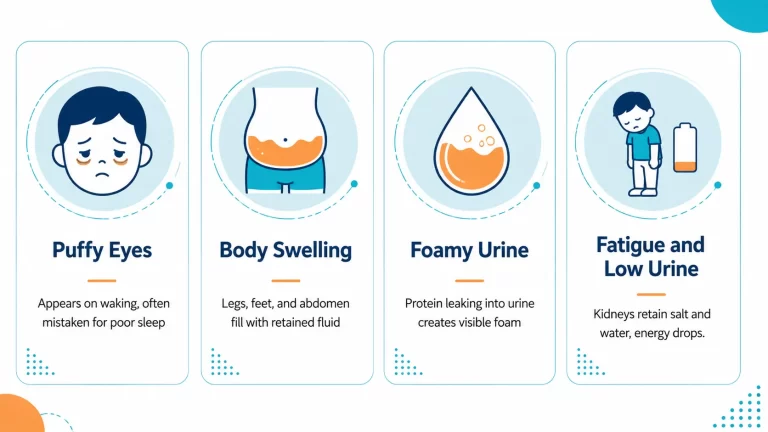
Puffy eyes, especially in the morning: The face and eyelids swell first, ahead of anywhere else. Worth noting specifically if it keeps returning after sleep, not appearing once and clearing up for good.
Body swelling that spreads: Past the face, it moves to the legs, feet, and belly. By that stage blood protein has already dropped quite a bit. Clothes and shoes tell the story before any test does.
Foamy urine that doesn’t clear: Normal urine doesn’t foam the way this does. So when it shows up again and again alongside the puffiness, that pairing is enough reason to get it checked.
Fatigue, poor appetite, and less urine: Salt and water get held back by the kidneys as a response to low blood protein. Less urine than usual, a child who picks at food and seems flat. Quiet signs, but consistent ones.
Sparsh’s nephrology care team confirms the diagnosis with a urine protein test, blood tests, and clinical assessment in a single visit.
What Causes Nephrotic Syndrome in Children and How Is It Managed?
In most children, no specific disease triggers it. But the pattern of the condition gives a lot away.
Minimal change disease: The most common cause in the two to seven age group. Kidney filters look structurally normal under routine microscopy. Steroids clear it for most children, though relapse tends to follow at some point.
Secondary causes: Lupus, diabetes, and some infections can directly hit the kidney filters and cause this as a complication. The root condition needs managing alongside, not after, the kidney problem.
Steroid-resistant cases: A proportion of children simply don’t shift with standard steroid treatment. What follows is a kidney biopsy, and from those findings a different medication approach gets mapped out, sometimes for the long run.
Infection risk: Blood protein loss pulls down the immune response. Children on active treatment pick up bacterial infections more easily than usual, so vaccination history and regular monitoring both get factored in.
Because kidney disease can quietly suppress red blood cell production, the blog on anemia in children is worth reading for any parent managing an ongoing kidney condition.
A urine protein check is where the assessment begins. Don’t sit on swelling that keeps returning.
Why Choose Sparsh Children's Hospital?
Sparsh Children’s Hospital runs a dedicated pediatric nephrology unit where urine tests, blood work, and specialist review happen in one visit. Not across three appointments, not via referrals to other departments. Children who need ongoing monitoring stay within the same team.
Kids who relapse or move onto steroid-sparing medication get a plan built around their own case history, not a standard one-size protocol. Protein levels, blood counts, growth, and blood pressure all get tracked at each visit, not pulled up only when a problem surfaces.
FREQUENTLY ASKED QUESTIONS:
Most cases respond to steroids. Some relapse but stay manageable with proper follow-up.
Through a urine test showing high protein, blood tests for albumin, and clinical assessment.
Most children recover well. Steroid-resistant or repeatedly relapsing cases carry more long-term risk.
Returning eye puffiness, leg swelling, foamy urine, or reduced urine output after a period of remission.
References
Disclaimer: This blog is for educational purposes only and does not substitute professional medical advice.