

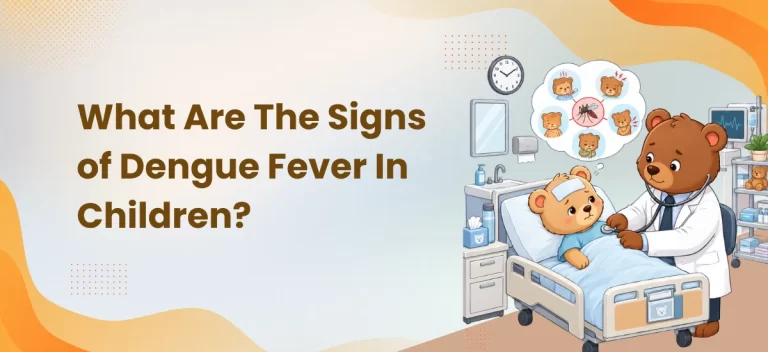
Dengue doesn’t ease its way in. The fever arrives suddenly, usually climbing to 39°C or 40°C within hours, not days. What makes it different from a routine viral illness is what comes with it. Severe headache, pain specifically behind the eyes, and body aches that can make a child unwilling to move, all showing up together in the first two to three days. A rash may appear a few days later. Some children seem to improve briefly before getting worse again. That pattern is characteristic and worth knowing. Dengue is spread by mosquitoes and particularly active in urban India around and after the monsoon season. Dengue symptoms in children often look similar to other infections in the opening hours, which is part of why cases get missed or treated as something else early on.
According to doctors at Sparsh Children’s Hospital’s General Pediatrics in Parel, “A child with dengue will often have a fever that doesn’t respond the way a normal viral fever would. Add headache, eye pain, and body aches to that picture, and we treat it as dengue until a blood test tells us otherwise.”
What Are the Common Dengue Fever Signs in Children?
The early signs look deceptively like any other febrile illness. A few specific ones give the diagnosis away.
- Sudden high fever: It comes on quickly. Not a gradual climb over a day, but a sharp rise to 39°C or 40°C that often doesn’t come down well with paracetamol. The speed of that rise is often the first thing parents notice, and it’s usually where dengue begins.
- Severe headache and pain behind the eyes: These two rarely show up together in a straightforward cold or throat infection. A child who complains of head pain and discomfort specifically when moving their eyes during a high fever is showing something that needs a dengue test.
- Muscle and joint pain: Sometimes called breakbone fever for a reason. The body aches in dengue are intense enough that some children don’t want to be moved or touched. Younger children may just seem unusually still and flat.
- Skin rash and bleeding from small vessels: A red or blotchy rash usually appears around day three to five. Small red dots under the skin, called petechiae, can follow in more severe cases. When they appear, platelet count has already started falling and a medical review the same day is needed.
Sparsh’s general pediatrics team arranges dengue-specific blood tests and platelet monitoring the same day in suspected cases.
When Do Dengue Symptoms in Children Become Dangerous?
Most dengue cases in children settle with rest and fluids. The ones that don’t can turn quickly.
- Fever that breaks but the child gets worse: The fever dropping around day four or five can feel like things are improving. In severe dengue, this is often when the real risk begins. A child who’s harder to rouse, more lethargic, or visibly worse after the temperature falls needs assessment without delay.
- Persistent vomiting and inability to keep fluids down: Dengue dehydration doesn’t wait. A child who can’t hold down water or oral rehydration solution over several hours needs IV fluids. Another oral medication won’t cover the gap.
- Abdominal pain or swelling: Pain in the abdomen during a dengue illness, particularly on the right side, can mean fluid has started leaking into body cavities. Not a symptom to monitor at home. It needs hospital evaluation the same day.
- Bleeding signs: Gums that bleed without cause, nosebleeds, blood in urine or stool, skin that bruises easily alongside a fever. Any of these means platelet count has fallen to a point where close monitoring is needed and transfusion may become necessary.
The blog on pediatric ward care explains when a fever that won’t settle or a child who’s getting worse needs hospital admission rather than home management.
Is your child’s fever different from the usual?
Why Choose Sparsh Children's Hospital?
Sparsh Children’s Hospital handles suspected dengue through its general pediatrics unit, where blood counts and platelet levels are checked on-site. Families don’t get sent to an external lab while symptoms progress. The trend in platelet numbers matters more than any single reading, and serial monitoring happens within the same facility.
Children who need IV fluids, close platelet monitoring, or inpatient care have all of that available here. Parents don’t get turned away or referred out at the point when dengue is most dangerous.
FREQUENTLY ASKED QUESTIONS:
A blood test called NS1 antigen detects dengue early. Platelet count is monitored alongside it.
Mild cases can be managed with rest and fluids. Severe cases or falling platelets need hospital admission.
Fever typically lasts five to seven days. The critical period is usually days four to six.
Avoid ibuprofen and aspirin entirely. They increase bleeding risk. Use paracetamol only for fever.
References
Disclaimer: This blog is for educational purposes only and does not substitute professional medical advice.