

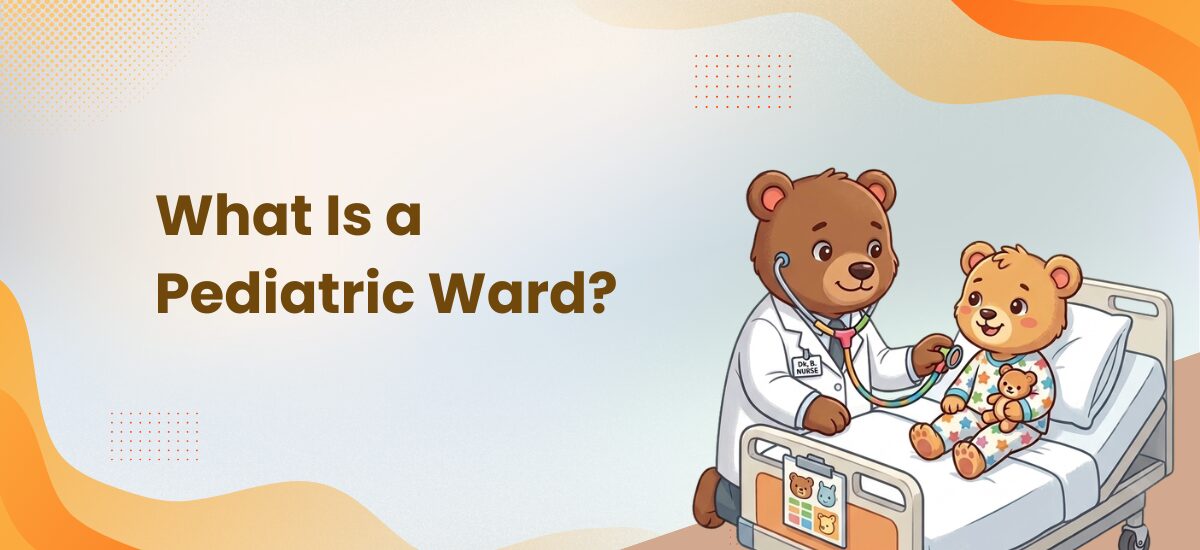
A pediatric ward is a hospital unit built specifically for the medical care of infants, children, and adolescents, usually up to the age of 18. It’s staffed by doctors and nurses trained in pediatric medicine, and set up to support both the treatment a child needs and the reassurance their family needs alongside it. Only children who are critically ill require intensive care. Most children who get admitted to hospital are treated and monitored right here, in a unit built around their age and their condition.
According to doctors at Sparsh Children’s Hospital, “A ward admission simply means a child needs specialized care and constant monitoring that home can’t provide right now. It’s not about how alarming things look, it’s about giving the child the closer attention their condition calls for.”
What Happens in a Pediatric Ward?
Care here focuses on steady monitoring and treatment suited to a child’s age and condition.
- Vital signs checked through the shift: Nurses track temperature, heart rate, oxygen levels, and breathing at regular intervals, so nothing goes unnoticed.
- IV fluids or medication when needed: Children who can’t keep food or medicine down by mouth get fluids or antibiotics through a vein instead.
- A parent stays close by: One parent is welcome to remain with the child through the stay, since a familiar face nearby genuinely helps a child settle in.
- Daily doctor rounds: Pediatricians check in once or twice a day, adjusting treatment based on how the child is actually responding.
Sparsh’s pediatric services are built around this kind of coordinated, ward based care.
When Does a Child Need Pediatric Ward Admission?
Some conditions need more than a home remedy and a follow up visit can offer.
- A seizure that needs watching: A child who has had a seizure, especially a first one, is usually admitted for observation and further testing.
- Fever that won’t settle: High fever that doesn’t respond to medication, or comes with other worrying signs, needs closer monitoring than home allows.
- Dehydration or an infection needing IV treatment: When oral fluids or medicine aren’t enough anymore, a ward stay allows treatment through a vein instead.
- An injury that needs observation: Falls, fractures, or other injuries that need watching after initial treatment often mean a short admission.
The blog on Pediatric Ward vs General Ward vs PICU vs NICU lays out how these different units actually compare.
Need expert pediatric care?
Why Choose Sparsh Children’s Hospital?
Sparsh Children’s Hospital has its pediatric ward, NICU, and PICU under one roof, so a child never has to be moved to another hospital if things change either way. The same pediatricians stay on the case throughout, no handoffs between unfamiliar teams.
Parents get told what’s happening at each stage, from the moment of admission through daily rounds to the discharge conversation, not just handed a summary at the end.
FREQUENTLY ASKED QUESTIONS:
What is the difference between a pediatric ward and PICU?
Ward care is for kids who are sick but stable. PICU is for kids whose vitals need watching minute to minute, not hour to hour.
How long do children usually stay in a pediatric ward?
Depends entirely on what’s being treated. A common infection might mean a day or two. Some conditions need longer, closely watched stays.
Can parents stay with their child in the pediatric ward?
Yes, almost always. Most wards build in space for a parent to stay the whole time, since it genuinely helps the child cope.
What conditions typically need a pediatric ward admission?
IV antibiotics or fluids, dehydration, breathing trouble that’s stable but concerning, or observation after a procedure. These cover most admissions.
References:
- World Health Organization (WHO). Pocket Book of Hospital Care for Children
- American Academy of Pediatrics, via PubMed Central (NIH). Direct Admission to Hospital for Children in the United States
Disclaimer
This blog is for educational purposes only and does not substitute professional medical advice.