
Something feels off before any diagnosis exists. That’s how most parents describe it. Cerebral palsy affects movement, muscle tone, and how the body develops motor skills. It traces back to brain injury, before birth, during delivery, or in the weeks just after. The early signs of cerebral palsy in infants don’t announce themselves clearly. A baby whose limbs feel wrong, milestones that don’t arrive, trouble at feeds, poor head control. Any of these can appear in the first months. Most diagnoses land between 12 and 24 months, but that’s not a reason to wait. Assessment should begin the moment a concern surfaces.
According to doctors at Sparsh Children’s Hospital’s pediatric neurology, “Parents often notice something feels different before any label is given. A baby who’s unusually stiff, or unusually floppy, or not moving one side the same as the other, that’s worth bringing in early. We’d rather assess and reassure than have a family wait a year before anyone looks.”
What Are the Early Signs of Cerebral Palsy in Infants?
Not every sign shows at the same time. Some surface in the first few weeks. Others take months.
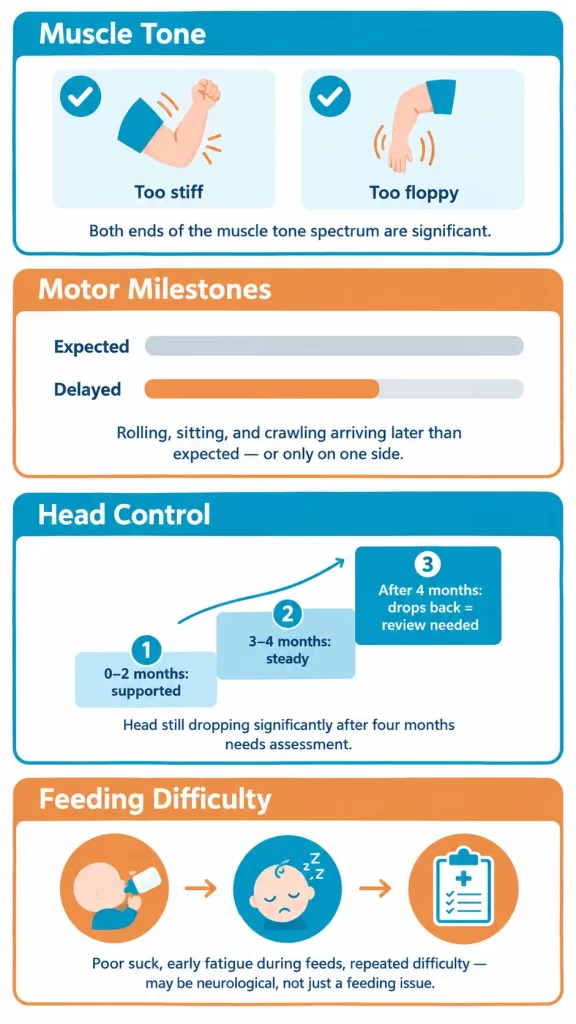
These four signs rarely appear together from the start. One thing catches a parent’s eye first. Maybe the muscle tone. Maybe the way feeds go. What matters is that no single sign needs to be dramatic to be worth bringing in. The pattern across all four is what a clinician looks for. Caught early, it opens a window for intervention. Left a few more months, that window gets smaller.
Sparsh’s neurology care team assesses motor development, muscle tone, and neurological function in infants showing any of these signs.
When Should Parents Seek Assessment for Cerebral Palsy Signs?
Early signs of cerebral palsy in infants need evaluation, not home monitoring. The sooner a concern is raised, the sooner the right support begins.
- Asymmetric movement between two sides: A baby who favours one hand before nine months or whose legs don’t kick evenly should be seen. Early and reliable flag.
- Primitive reflexes lasting too long: Newborn reflexes normally fade in the first few months. Lingering well past that point is worth a neurological check.
- Stiffness during handling or dressing: Legs that scissor when lifted or arms that resist normal movement. Parents notice this before clinicians do.
- Seizures in early infancy: A seizure in a young infant may point to birth-related brain injury. Developmental follow-up is needed either way.
Cerebral palsy often overlaps with other developmental concerns, and the blog on delayed speech in toddlers covers how communication delays that come with CP are assessed alongside motor signs.
Has your baby missed motor milestones or shown unusual muscle tone?
Why Choose Sparsh Children's Hospital?
Sparsh Children’s Hospital has a pediatric neurology unit led by Dr. Vrushabh Gavali, MD in Pediatrics from KEM Hospital Mumbai, with a fellowship in child neurology and eight years of experience in developmental disorders and rehabilitation. Infants with suspected cerebral palsy are assessed clinically and with imaging within the same team. Early intervention referrals, physiotherapy coordination, and developmental monitoring are built into follow-up from the start, not added later when something worsens.
FREQUENTLY ASKED QUESTIONS:
Some early signs show up, but a firm diagnosis usually comes between 12 and 24 months.
Not always. Milder cases often become noticeable only when motor milestones are missed.
The brain injury itself doesn’t worsen. But its effect on movement can shift as the child develops.
Book an appointment with a pediatric neurologist for a muscle tone and motor development assessment.
References
Disclaimer: This blog is for educational purposes only and does not substitute professional medical advice.