

Delayed speech in toddlers isn’t always a sign something is wrong. But it’s rarely something to wait out either without at least a proper look. Speech and language fall behind for many different reasons, some of them straightforward, some that need specialist input. Hearing problems are the most common starting point. After that, the list includes structural or muscle issues in the mouth, autism spectrum disorder, global developmental delays, and neurological conditions. In some cases, limited language input at home is the main factor holding a child back. Most toddlers say their first clear words around twelve months and start combining two words by two years. When those windows pass without progress, it’s worth acting on, not panicking, but not putting off either.
According to doctors at Sparsh Children’s Hospital’s General Pediatrics in Parel, “Speech delay is one of the most common concerns parents raise, and it’s also one of the most misread. Some children are late talkers who catch up on their own. Others have a cause that needs identifying. A proper assessment is the only way to tell the difference.”
What Are the Common Causes of Delayed Speech in Toddlers?
There’s rarely one clear answer. Most cases of delayed speech in toddlers have a cause that sits somewhere in a short list, and separating them takes an evaluation, not a guess.
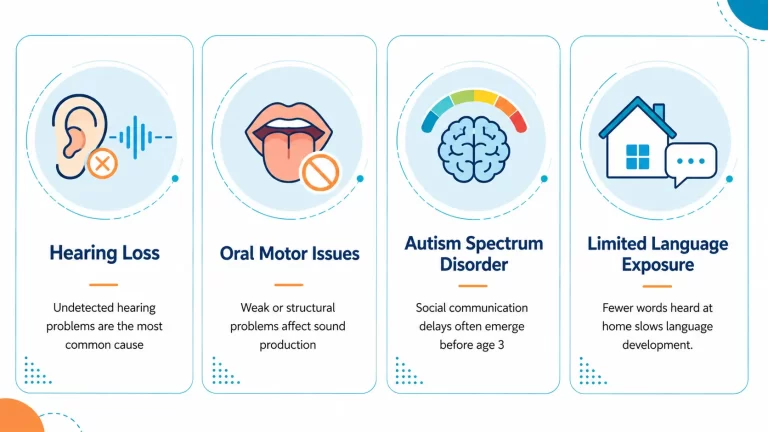
Hearing loss or recurring ear infections: Sound has to reach the brain clearly for a child to learn how to copy it. Even mild hearing loss, or fluid sitting behind the eardrum after repeated infections, disrupts that process quietly and consistently. Parents don’t usually see it happening.
Oral motor or structural problems: Speech needs the mouth, tongue, and jaw to coordinate quickly. Some children have reduced muscle tone or structural differences that make certain sounds harder to produce, even when they understand everything being said around them.
Autism spectrum disorder: The speech delay here rarely comes alone. A toddler not responding to their name, avoiding eye contact, or skipping back-and-forth interaction is showing something beyond a simple language lag. Those patterns together point somewhere different.
Neurological conditions or global developmental delay: When speech delay sits alongside delays in movement or thinking or social skills, a broader underlying cause is usually at work. Speech therapy on its own isn’t enough for these cases. Specialist input is needed first.
Sparsh’s pediatric neurology team identifies which cause is actually driving the delay before any plan is built around it.
When Should Parents Get Delayed Speech in Toddlers Evaluated?
Some children talk later than others. But a few patterns are reliable enough that waiting stops making sense.
No babbling by twelve months: Babbling is what comes before words. A baby not making varied sounds by this point isn’t just quiet. It’s usually an early sign the language system needs checking.
No single words by sixteen months: Most toddlers reach ten or more words well before this point. A child with no recognizable words by sixteen months is past the window where waiting is a reasonable plan.
No two-word phrases by two years: Combining words, even rough ones, is a meaningful milestone. Missing it by the second birthday is one of the clearest flags a clinician looks for.
Losing speech skills that were already there: A toddler who was saying words and then stopped is a different situation to one who’s simply developing slowly. Regression needs prompt attention. Not monitoring. Action.
Like other developmental milestones that parents sometimes mistake for normal variation, the blog on leg pain at night in children shows how easy it is to underestimate timing, and why knowing when to act matters.
Not sure if your child’s speech delay needs attention?
Why Choose Sparsh Children's Hospital?
Sparsh Children’s Hospital sees delayed speech in toddlers across general pediatrics and pediatric neurology under the same roof. Developmental screening, hearing checks, and neurological review don’t happen across three separate appointments at three different locations. They happen together.
Children who need speech therapy referrals, autism assessments, or further developmental testing get those connections made from within the same team. Parents aren’t left coordinating between departments on their own.
FREQUENTLY ASKED QUESTIONS:
No. Many causes exist including hearing loss, oral motor issues, and limited language exposure.
Any concern from twelve months onward is worth raising with a pediatrician. Don’t wait for age two.
Some late talkers catch up on their own. But without an assessment, there’s no way to know which children need help.
Hearing tests, developmental screening, and clinical observation of how the child communicates and interacts.
References
Disclaimer: This blog is for educational purposes only and does not substitute professional medical advice.