

A heart problem in a child rarely looks the way it does in an adult. Congenital heart defects are actually the most common type of birth defect, and a good number of them go unnoticed until a routine checkup happens to catch something. Others build up slowly. Poor weight gain even with a normal appetite. A baby who tires out halfway through a feed. And skin around the lips or fingertips that looks a shade bluer than usual. At Sparsh Children’s Hospital, the team watches for exactly this kind of pattern. Because a sign this small is often the one that ends up mattering most.
According to doctors at Sparsh Children’s Hospital which offers Pediatric Services in Parel, “Most heart conditions in children don’t announce themselves loudly. A baby who tires out halfway through a feed, or a toddler who’s always a bit short of breath during play, that’s often the first clue anyone gets. Catching it early changes the whole treatment path.”
What Are the Common Signs of a Heart Problem in a Child?
A few of these look like nothing more than a tired toddler. Parents miss them for that exact reason.
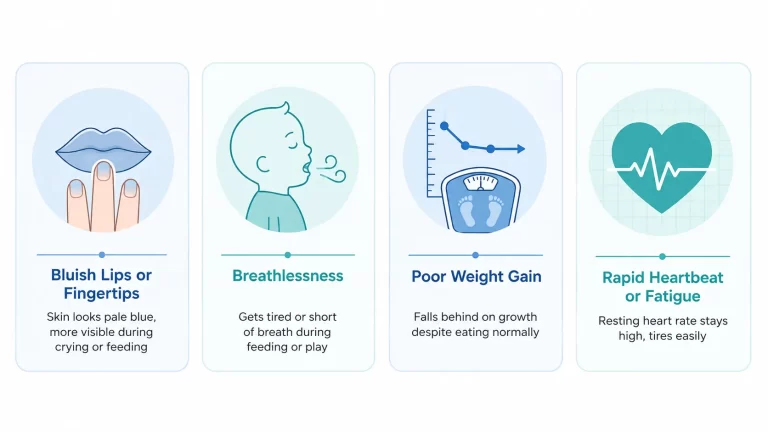
These four signs rarely show up alone. A bluish tint around the lips points to low oxygen in the blood. Breathlessness during feeding or play means the heart’s working harder than it should. Weight that lags despite normal eating, and a resting heart rate that won’t settle down, both deserve a second look too. None of them confirm a diagnosis on their own. But together, they’re usually enough reason to get checked.
A checkup with Sparsh’s pediatric cardiology care team usually clears up whether it’s something serious or not.
When Should Parents Get a Child's Heart Checked?
Not every case calls for panic, but a few situations do need a proper evaluation, and soon.
A heart murmur found at a routine visit: Most turn out fine. Still, that call belongs to a doctor, not a guess.
Fast breathing that doesn’t settle with rest: A baby’s breathing rate should drop once they’ve calmed down. If it doesn’t, a cardiac cause needs ruling out.
Fainting or chest pain during exercise: Doesn’t happen often in kids. When it does happen tied to physical activity, waiting isn’t the right call.
A family history of heart defects or sudden cardiac death: On its own, this is reason enough to screen. No symptoms required.
The blog on babies breathing fast covers how to tell normal newborn breathing apart from a warning sign.
Get a proper heart evaluation for your child.
Why Choose Sparsh Children's Hospital?
Sparsh Children’s Hospital‘s pediatric cardiology team sees children across every age group, newborns getting screened right after birth, teenagers being cleared for competitive sports, everyone in between. Diagnosis doesn’t stop at a stethoscope. Cardiac imaging, including echocardiography, happens on-site. A suspected issue gets an answer in days, not weeks.
Some children need to be watched over time, whether that’s a murmur being tracked or a repaired defect being followed into adulthood. Each one gets a follow-up plan shaped around their own condition, not a template applied across the board.
FREQUENTLY ASKED QUESTIONS:
Yes. Many mild heart defects show no symptoms and turn up only during a routine checkup.
Not always. Many childhood murmurs are innocent, but a doctor should confirm that rather than assume it.
Usually an echocardiogram first. An ECG or pulse oximetry screening may follow, depending on what’s found.
Most can be. Options range anywhere from simple monitoring to medication, or surgery when needed.
References
Disclaimer: This blog is for educational purposes only and does not substitute professional medical advice.