

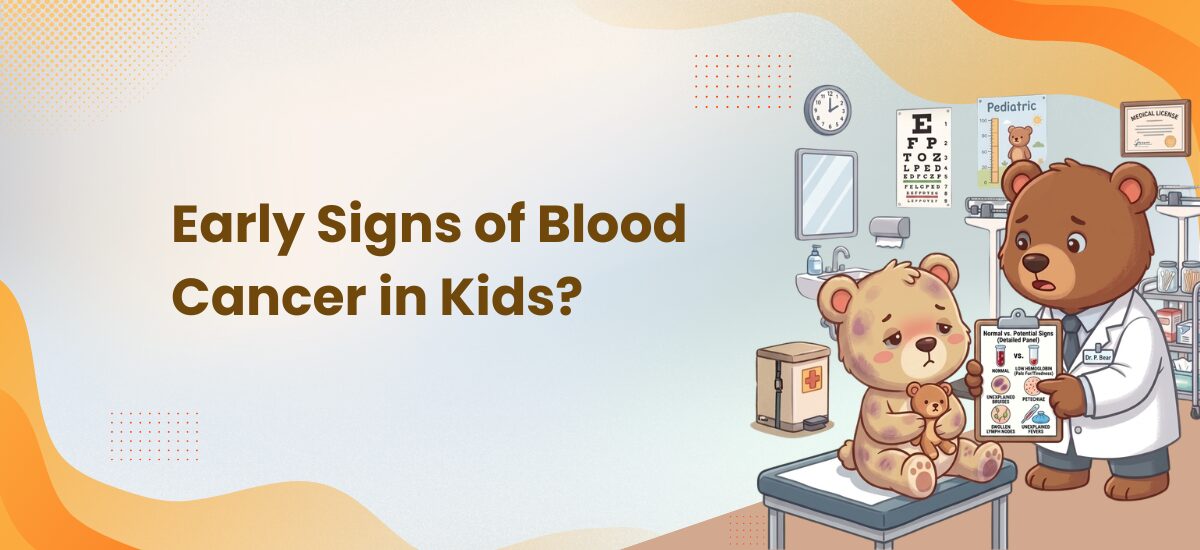
A virus that won’t quit. A bruise that showed up from nowhere. That’s usually how it starts, not with anything that looks like cancer. Leukemia happens to be the most common cancer in children, and in the early weeks it just looks like a kid who’s been sick a bit too long. Sparsh Children’s Hospital’s pediatric hematology and oncology team sees this come up more than people expect, a child brought in for a stubborn fever, and a blood report that says something else entirely.
According to specialists at Sparsh Children’s Hospital, “Blood cancer in a child rarely looks alarming at first. Some fatigue, a low fever, a bit of bruising. Most of the time it’s nothing. Once in a while it’s not, and a blood count is the only way to tell the difference.”
What Are the Early Signs of Blood Cancer in Children?
None of these signs are dramatic on their own, and it’s the persistence that matters.
- Fever that won’t fully go: Not the usual two or three day viral fever. This one lingers, comes back, or never quite settles even with treatment.
- Bruising and bleeding that don’t add up: A child who bruises from ordinary bumps, or bleeds longer than expected from a small cut. Tiny red or purple dots under the skin, called petechiae, are worth noting too.
- Pale skin and constant tiredness: Red blood cell production drops as leukemia cells take over marrow space. A child who’s suddenly low on energy or breathless with normal play deserves a blood test.
- Swollen lymph nodes, bone or joint pain: Painless lumps in the neck, armpit, or groin that don’t shrink after a couple of weeks, or bone pain that sometimes shows up as an unexplained limp.
A single CBC at Sparsh usually gives the first clue, and an oncology assessment takes it from there.
Which Children Are More at Risk of Blood Cancer?
Most children who develop leukemia have no identifiable risk factor at all, though a small proportion do.
- Down syndrome: Children with Down syndrome carry a significantly higher risk of developing leukemia compared to children without it.
- A sibling with leukemia, especially a twin: Genetic and shared prenatal factors raise risk somewhat in siblings, and considerably more in identical twins.
- Prior radiation or chemotherapy exposure: Children previously treated for another cancer carry an increased risk of a second, unrelated leukemia years later.
- Certain inherited genetic conditions: Fanconi anemia, Li-Fraumeni syndrome, and neurofibromatosis type 1 are among a small group of conditions linked to higher leukemia risk.
Bone pain that keeps a child up at night deserves its own scrutiny too, and the blog on leg pain at night in children covers how to tell growing pains apart from something more.
Caught early, most childhood blood cancers respond well to treatment. It usually starts with nothing more than a blood test.
Why Choose Sparsh Children’s Hospital?
Sparsh Children’s Hospital runs a dedicated pediatric hematology and oncology unit that treats unexplained fever, bruising, fatigue, and lymph node swelling as connected pieces of one workup, not separate complaints handled by different doctors. Blood count, smear, and any further specialist testing happen without a child being shuffled between departments.
Kids who need long term monitoring, whether they’re mid-treatment or years into being cancer-free, stay on a structured follow-up plan. Blood counts, growth, organ function, all checked as they get older, not just when something looks wrong.
FREQUENTLY ASKED QUESTIONS:
Is blood cancer common in children?
Among childhood cancers, it’s the most frequent type, though cancer overall remains rare in kids. Acute lymphoblastic leukemia specifically is the single most common diagnosis.
What is usually the first sign parents notice?
Most often a fever that won’t fully settle, paired with unusual tiredness. On its own it looks like any viral illness, which is why it gets missed early on.
Can blood cancer in children look like an ordinary illness at first?
Yes, that’s exactly why it’s often missed early. Fatigue, low fever, and mild bruising overlap heavily with common childhood infections in the first few weeks.
Should I worry about a single bruise on my child?
Not really, kids bruise from everyday bumps and falls all the time. It’s worth a second look when bruising shows up without an injury, appears in odd places, or comes along with fatigue or fever.
References:
- National Library of Medicine (NIH). Childhood Leukemia
- National Cancer Institute (NIH). Cancer in Children and Adolescents
Disclaimer
This blog is for educational purposes only and does not substitute professional medical advice.