

Childhood obesity treatment starts with questions, not prescriptions. A pediatrician looks at what a child eats, how active they are, how the household runs, and whether anything medical is getting in the way. From there, the plan moves in steps, beginning with lifestyle changes and going further only when those aren’t enough. Some children have a hormonal or metabolic cause behind the weight gain. Others need changes across the whole family. Either way, the goal is lasting health, not just a lower reading on the scale.
According to doctors at Sparsh Children’s Hospital’s Pediatric Endocrinology in Parel, “Parents sometimes come in expecting a prescription. What we usually start with is a conversation, about what the child eats, how much they move, how much they sleep, and what the rest of the family does. The answers shape everything that comes after.”
How Does a Pediatrician Approach Childhood Obesity Treatment?
Every child’s starting point is different. Age, weight, and what’s driving it all shape how treatment is structured.
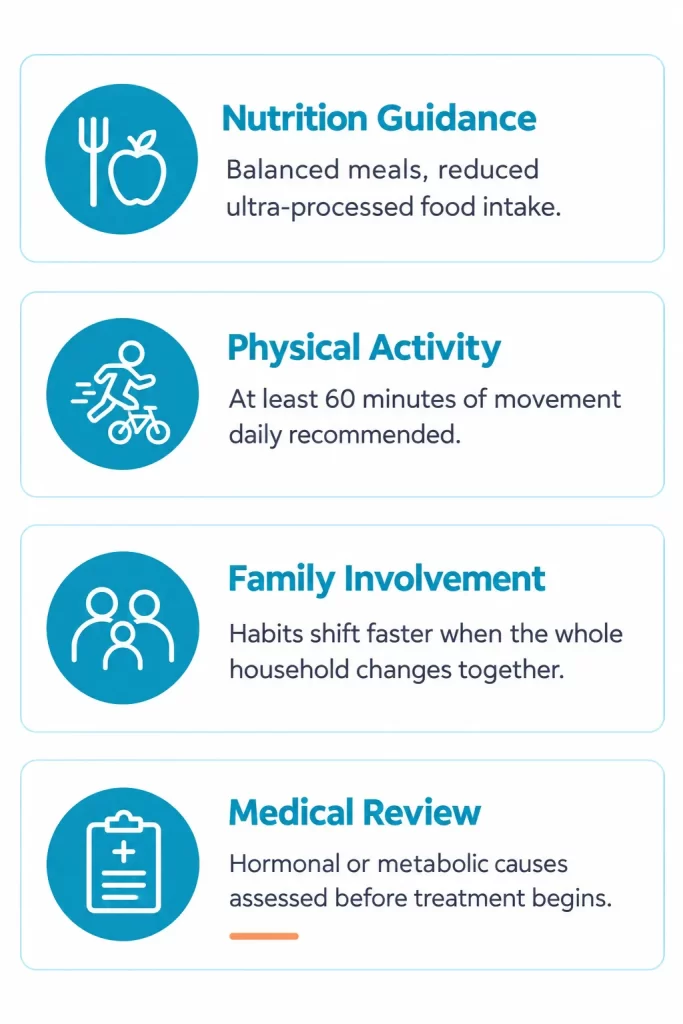
These four areas get addressed first, but each one involves more than the label suggests. Nutrition guidance isn’t about cutting food sharply. It’s about finding swaps the child will accept, reducing ultra-processed intake bit by bit, and bringing more consistency to meals rather than restriction. Physical activity is planned around what the child actually enjoys, not a schedule handed to them that stops within a week. And the medical review underneath it all checks whether something like thyroid dysfunction or insulin resistance is working against everything the family tries.
Sparsh’s pediatric endocrinology team evaluates hormonal and metabolic factors alongside the general pediatrics assessment for children where weight gain has a clinical component.
When Does Childhood Obesity Treatment Need More Than Lifestyle Changes?
For most children, lifestyle modification is where treatment stays. For some, it needs to go further.
- When weight-related health problems have already developed: High blood pressure, pre-diabetes, sleep apnoea, or joint pain in a child can’t sit on a waiting list. Those conditions need medical attention now, running alongside the broader work on weight rather than after it.
- When an underlying condition is driving the weight gain: Hypothyroidism, Cushing’s syndrome, insulin resistance, and certain genetic conditions all affect weight regardless of what the family does at home. Ruling these out before committing to a plan saves months of effort going nowhere.
- When structured intensive intervention is needed: Some children don’t respond to standard lifestyle changes over several months. At that point, a dietitian, a child psychologist, and a pediatrician working together is the next step. A different model, not just more pressure on the same one.
- When medication becomes appropriate: For older children with significant obesity and health complications, medication may come in under specialist guidance. It runs alongside lifestyle work. Not instead of it.
When obesity-related complications need closer observation or medical investigation, the blog on pediatric ward care explains when hospital-level monitoring becomes the right next step.
Is your child’s weight affecting their health or development?
Why Choose Sparsh Children's Hospital?
Sparsh Children’s Hospital handles childhood obesity across general pediatrics and pediatric endocrinology under the same roof. A child seen for weight concerns doesn’t need three separate referrals before anyone checks for a hormonal cause. Everything is done here, in one visit, by a team that already has the full picture.
Parents don’t leave with a generic handout. The plan is built around what that household can realistically do. Nutrition guidance, activity counselling, and follow-up are shaped around actual life, not a template. And children with underlying conditions get those managed as part of the same care, not handed off separately.
FREQUENTLY ASKED QUESTIONS:
BMI at or above the 95th percentile for age and sex indicates obesity and warrants a clinical assessment.
Often yes. Sustained changes to diet and activity, with the family involved, can bring BMI down meaningfully over time.
No. Without treatment, the risks of diabetes, heart disease, and joint problems carry into adulthood.
Months, not weeks. Real improvement takes consistent effort and regular medical review alongside it.
References
Disclaimer: This blog is for educational purposes only and does not substitute professional medical advice.