

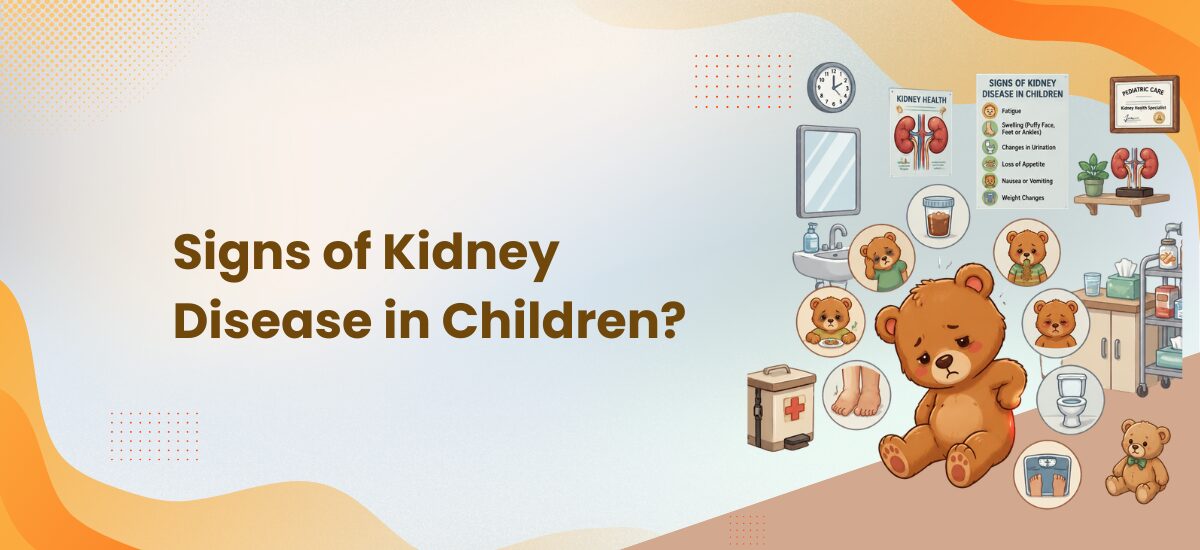
Early kidney disease in children is often completely silent. No pain. Nothing that makes a parent think twice. As it progresses, changes show up in how the child looks, energy levels, toilet habits. The problem is that by the time those changes are visible, kidney function has usually been compromised for months. Sparsh Children’s Hospital manages pediatric kidney conditions through its nephrology unit with early detection, investigation, and long-term monitoring built into the care pathway.
According to Sparsh Children’s Hospital, “Kidney disease in children gets missed because it doesn’t hurt. Parents and doctors are both looking for symptoms that often don’t appear until the kidneys are significantly stressed.”
What Signs of Kidney Disease Show Up in Children?
Some appear suddenly. Others take months to become obvious, and by then parents have explained them away as tiredness, a growth phase, or something the child ate.
- Puffy eyes and swollen feet: Mornings mostly eyes that look like the child didn’t sleep, swollen ankles by afternoon. Fluid accumulating because protein is leaking through damaged kidney filters. Called nephrotic syndrome. Gets treated as allergies or poor sleep for weeks before a urine test shows what’s actually happening.
- Urine that looks wrong: Frothy means protein. Tea-coloured or cola-coloured means blood. Haematuria in a child can point to glomerulonephritis or a kidney stone. Neither is a wait-and-watch situation both need investigation within the week.
- Blood pressure that keeps reading high: Hypertension in children is almost always caused by something secondary. Kidney disease is at the top of that list. Most children don’t get their blood pressure checked at all outside of hospital visits, which is exactly why this gets missed until it’s been running high for years.
- Tired all the time, pale, not eating: Kidneys produce erythropoietin, which drives red blood cell production. When they fail, anemia follows. A child who is persistently exhausted, disinterested in food, pale despite adequate sleep that’s not iron deficiency until kidney function has been checked and cleared.
- Toilet habits changing: More frequent urination, waking at night for the bathroom, or barely urinating at all. A dry child is starting to wet the bed again. Fluid regulation breaks down early in kidney disease and the urination pattern is often the first place it shows.
Any of these a pediatric nephrology assessment at Sparsh covers urine analysis, kidney function blood tests, and ultrasound in one visit, not three separate referrals.
Which Children Face a Higher Risk of Kidney Disease?
It doesn’t appear without reason. Most cases have identifiable background factors that make screening worthwhile before symptoms arrive.
- Repeated UTIs: One infection, treat it. Two or three, investigate why. Vesicoureteral reflux urine flowing backward toward the kidney causes repeated infections and silent scarring with each one. Children under 5 with recurrent UTIs need imaging, not just another antibiotic course.
- Family history: Polycystic kidney disease is inherited. A parent or sibling on dialysis, post-transplant, or with diagnosed chronic kidney disease means the child needs baseline kidney screening now, not when symptoms appear.
- Born premature: Kidneys finish developing in the final weeks of pregnancy. Premature infants start life with fewer nephrons than they need and carry higher lifetime risk of hypertension, reduced kidney function, and chronic kidney disease often not apparent until adulthood unless monitored from childhood.
- Diabetes: Both Type 1 and Type 2 damage kidney blood vessels over time. Annual urine microalbumin testing from early in the disease is standard for this reason. Diabetic nephropathy starts silently and moves faster in children than adults when it’s not being watched.
- Regular ibuprofen use: NSAIDs are nephrotoxic in children with already-compromised kidney function. The problem is parents don’t know kidney function is compromised because it was never checked. Routine ibuprofen for fever or pain in a child with undiagnosed marginal kidney function causes more damage than most families are told.
The blog on vomiting and loose stools in kids covers fluid loss and dehydration which directly impacts kidney stress in children worth reading alongside this one.
Why Choose Sparsh Children’s Hospital?
Sparsh Children’s Hospital runs a dedicated pediatric nephrology unit covering nephrotic syndrome, glomerulonephritis, UTI-related scarring, hypertensive nephropathy, and congenital kidney anomalies. Urine analysis, GFR assessment, kidney ultrasound, and blood pressure review happen in a single coordinated appointment not sent across three different departments on three different dates.
Chronic kidney disease cases at Sparsh are followed over time with monitoring that tracks progression and catches deterioration before it becomes a crisis. The protocol adjusts as the child grows, not when a number hits a threshold and prompts an emergency review.
Disclaimer
This blog is general information about kidney disease signs in children. Not medical advice. Swelling, blood in urine, persistent fatigue, or consistently high blood pressure in a child don’t wait for it to get worse. See a pediatric nephrologist.
FREQUENTLY ASKED QUESTIONS:
Can kidney disease in children be cured?
Depends entirely on the cause. Nephrotic syndrome often responds to treatment and goes into remission. Structural anomalies and chronic kidney disease need long-term management, not a cure.
Is blood in a child’s urine always serious?
Always needs investigation. Minor infection to glomerulonephritis to kidney stone the range is wide. One visible episode warrants a urine test and ultrasound before the week ends.
How is kidney disease diagnosed in a child?
Urine analysis for protein and blood, creatinine and GFR blood tests, kidney ultrasound, blood pressure measurement. Together they show how the kidneys are functioning and whether structure is normal.
At what age can kidney disease develop in children?
Any age. Congenital anomalies are present from birth. Nephrotic syndrome peaks between 2 and 6 years. Diabetic nephropathy and hypertensive kidney disease build over time in older children.