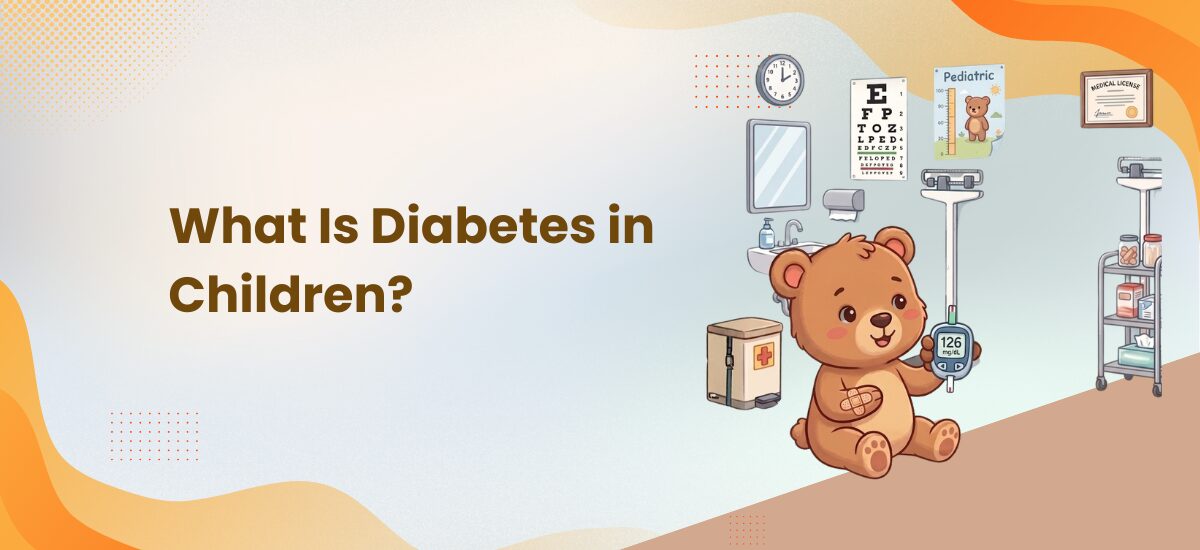
Childhood diabetes is a chronic metabolic condition where a child’s body cannot properly regulate blood sugar. Type 1 stops insulin production entirely the immune system destroys the cells responsible for making it. Type 2 is a different problem: insulin gets produced but the body ignores it. Neither type resolves on its own, and both require a long-term management plan that changes as the child grows. Sparsh Children’s Hospital runs a dedicated pediatric endocrinology unit for exactly this.
According to Sparsh Children’s Hospital, “Diabetes in children is not just about managing blood sugar numbers. It affects how a child grows, learns, and functions every day, and the family needs to understand it as well as the child does.”
How Are Type 1 and Type 2 Diabetes Different in Children?
The two types share a name and a blood sugar problem. Everything else about them cause, onset, and treatment is different.
- Type 1: An autoimmune condition. The pancreas loses its ability to produce insulin because the immune system attacks the beta cells that make it. No preventable cause. No reversing it. Insulin therapy begins at diagnosis and continues permanently. Shows up most in children under 10 but has no lower age limit infants get diagnosed too.
- Type 2: The pancreas produces insulin but muscle and fat cells stop responding to it properly. Builds over time rather than appearing suddenly. More common in adolescents than young children, particularly where obesity, inactivity, or a family history of Type 2 are present. Caught early, some cases stabilise with dietary changes before medication enters the picture.
- Getting the diagnosis right: A fasting glucose test, HbA1c measurement, and autoantibody screening together confirm which type and how far along it is. Type 1 and Type 2 require different initial treatment and different long-term monitoring plans, so identifying the right one from the start matters.
A pediatric endocrinology review at Sparsh confirms the type, initiates treatment, and gives the family a working management protocol in a single appointment.
What Early Signs of Diabetes Do Parents Most Often Overlook?
Diabetes in children rarely announces itself clearly. The early signs look like other things — tiredness, growth changes, a phase the child is going through. By the time blood sugar gets tested, weeks have usually passed.
- Thirst and urination that seem excessive: Water constantly, bathroom trips through the night, a toilet-trained child wetting the bed. The kidneys are attempting to clear elevated glucose from the bloodstream and the body is replacing the fluid as fast as it loses it.
- Weight dropping despite normal appetite: In Type 1 particularly, the body cannot access glucose for energy so it burns fat and muscle tissue instead. A child eating well but visibly lighter over three or four weeks warrants a blood glucose test before anything else.
- Fatigue and concentration problems at school: Glucose-starved cells underperform. Teachers notice first sometimes a child who was engaged and now isn’t, who is struggling to focus in ways that weren’t there before. Parents attribute it to sleep. Worth ruling out metabolically.
- Slow-healing cuts and recurring skin infections: High glucose impairs both circulation and immune function. Wounds that linger, infections that return after clearing, skin that doesn’t knit the way it should. Individually these seem minor. As a pattern they’re worth investigating.
- Fruity or sweet-smelling breath: Specific to Type 1 in early or undiagnosed stages. The body producing ketones as it metabolises fat creates a distinctive odour on the breath. This is a same-day clinical assessment situation, not something to monitor at home.
The blog on what causes breathing issues in children covers another group of symptoms that can overlap with metabolic conditions and is worth reading where multiple unexplained signs are appearing together.
Why Choose Sparsh Children’s Hospital?
Sparsh Children’s Hospital manages pediatric diabetes across both Type 1 and Type 2 through a dedicated endocrinology unit that covers initial diagnosis, insulin initiation, continuous glucose monitoring guidance, and dietary counselling. Age-specific protocols matter here the clinical approach for a four-year-old with Type 1 differs substantially from the approach for a fourteen-year-old with Type 2, and the unit is structured to manage both without applying one framework to the other.
Families at Sparsh receive direct training in glucose monitoring technique, insulin administration, hypoglycaemia recognition and response, and school-day management so that everyone involved in the child’s daily care is equipped not just the parent who attended the appointment.
Disclaimer
The information in this blog is for general informational purposes only and does not constitute medical advice, diagnosis, or treatment. If your child is showing symptoms described here, consult a qualified pediatric specialist. For appointments, contact Sparsh Children’s Hospital directly.
FREQUENTLY ASKED QUETSIONS:
At what age can Type 1 diabetes develop in children?
Type 1 has no minimum age. It is diagnosed in infants, toddlers, and school-age children, with the highest concentration of diagnoses falling between 4 and 14 years.
How is childhood diabetes diagnosed?
Through fasting blood glucose, HbA1c, and autoantibody testing. An initial elevated reading is confirmed with a repeat test before a formal diagnosis is made.
Does a child with Type 1 diabetes always need insulin?
Yes. Type 1 has no cure and no alternative to insulin therapy. Management focuses on dosing precision and monitoring rather than reducing or eliminating insulin dependence.
Can Type 2 diabetes in children be reversed?
Early-stage Type 2 can stabilise and partially reverse with structured dietary changes, increased activity, and weight management before medication becomes necessary. How far that reversal goes depends on how early the condition is caught and how consistently the changes are maintained.