
Krish Royale, Acharya Donde Marg, Parel, Mumbai, Maharashtra-400012

Sleeping baby resting in a wicker bassinet, tucked in a white blanket with a plush teddy bear nearby.

It often starts like this—your child wakes up at night crying, holding their legs, and saying it hurts.

As a parent, this can be confusing and worrying.

Is it just growing pains?
Or could it be something more serious?

At Sparsh Children’s Hospital, Parel, this is one of the most common concerns parents bring to pediatricians. The good news is that in many cases, it is harmless—but knowing when to act is important.

Quick Answer for Parents

👉 If your 5-year-old complains of leg pain at night, it is most commonly due to growing pains, especially if:

  • Pain occurs in both legs
  • It happens in the evening or at night
  • There is no swelling or redness
  • Your child is active and normal during the day

🚨 However, it may be serious if:

  • Pain occurs in one leg only
  • There is swelling, redness, or limping
  • Pain persists during the day
  • Your child avoids walking or playing

What Are Growing Pains in Children?

Growing pains are one of the most common causes of leg pain in children between 3 to 10 years of age.

Despite the name, they are not directly linked to growth, but rather to:

  • Muscle fatigue from daily activities
  • Overuse of leg muscles
  • Active play during the day

👉 These pains typically:

  • Occur in thighs, calves, or behind the knees
  • Appear in the evening or at night
  • Disappear by morning
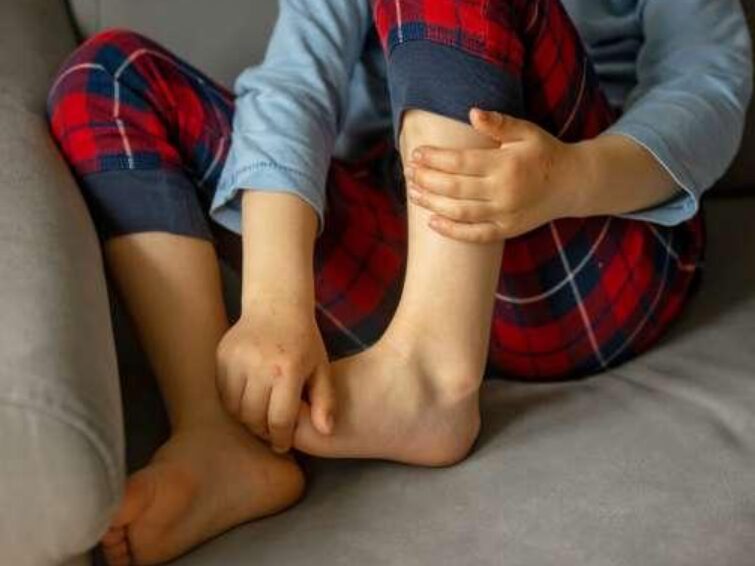
Child seated on a sofa, holding their ankle with both hands, wearing a blue top and red plaid pajama pants.

Why Do 5-Year-Olds Experience Leg Pain at Night?

Two young children playing with a pink ball on a grassy park, hopping over small yellow hurdles together

Let’s look at the most common causes:

  1. Growing Pains (Most Common Cause)

This is the leading reason for night-time leg pain in children.

👉 Key signs:

  • Pain in both legs
  • No visible swelling
  • Child feels fine during the day
  1. Muscle Fatigue or Overactivity

Children who run, jump, or play actively may experience soreness at night.

👉 This is similar to adults feeling body aches after a long day.

  1. Minor Injuries or Strain

Sometimes children may not mention small injuries that can lead to discomfort later.

  1. Vitamin D or Calcium Deficiency

Nutritional deficiencies can lead to:

  • Bone discomfort
  • Muscle weakness
  • Recurrent pain
  1. Flat Feet or Posture Issues

Improper foot alignment can strain leg muscles, especially after activity.

  1. Less Common but Serious Causes

Though rare, leg pain could be linked to:

  • Infections
  • Juvenile arthritis
  • Bone conditions

👉 These require medical evaluation.

When Should Parents Be Concerned?

🚨 Red flag signs to watch for:

  • Pain in only one leg
  • Swelling, redness, or warmth
  • Persistent pain during the day
  • Limping or difficulty walking
  • Fever along with leg pain
  • Pain that wakes the child frequently

👉 These signs may indicate a condition beyond growing pains.

How to Relieve Night Leg Pain at Home

For simple growing pains, you can try:

  • Gentle leg massage
  • Warm compress
  • Light stretching before bedtime
  • Ensuring proper hydration
  • Balanced diet rich in calcium and vitamin D

👉 These methods often provide quick relief.

Caregiver supporting a child's leg with a white wrap while colorful towels rest on a white bed.

When to Visit a Pediatric Hospital in Parel

Reception desk at Sparsh Children's Hospital with four staff members in maroon uniforms greeting visitors with a Namaste gesture.

You should consult a pediatric specialist if:

  • Pain occurs regularly
  • Symptoms worsen over time
  • Red flag signs are present

At Sparsh Children’s Hospital- A Pediatric Hospital in Parel, we provide:

  • Detailed pediatric evaluation
  • Child-friendly diagnostic approach
  • Expert care tailored for children

Early consultation helps rule out serious conditions and gives peace of mind.

Why Early Diagnosis Matters

While growing pains are harmless, ignoring persistent symptoms can delay diagnosis of:

  • Bone disorders
  • Joint problems
  • Nutritional deficiencies

That’s why it’s important to observe patterns and act when needed.

Conclusion

If your 5-year-old is complaining of leg pain at night, it is most often due to growing pains—especially if the pain is temporary and disappears by morning.

However, not all leg pain should be ignored.

As a parent, your role is to notice patterns, understand warning signs, and seek timely care when needed.

At Sparsh Children’s Hospital, we focus on providing safe, accurate, and compassionate pediatric care—so your child can stay active, healthy, and pain-free.

FAQs

Yes, it is commonly due to growing pains, especially if it occurs at night and disappears by morning.

Growing pains usually affect both legs and occur at night without swelling. Serious conditions often include swelling, limping, or daytime pain.

Yes, low levels of vitamin D or calcium can lead to bone and muscle discomfort.

If pain is persistent, occurs during the day, or is associated with swelling or limping, consult a pediatrician.

Massage, warm compress, stretching, and proper nutrition can help relieve mild growing pains.

author avatar
admin_sparshpi

Leave a Reply

Your email address will not be published. Required fields are marked *